


Paintings, Drawings and installations
Billy Barn has been going through a transformation now for over 30 years. The cows are gone over 40 years and the first set or dance rehearsals took place in the early 1990s. Plywood was nailed to the floor of the middle hay loft, the milk-house was transformed to sleeping quarters and a full bathroom was built in the wash-room.
In 2002 the first wood shop/studio was built. It was mainly a wood shop and secondary, a studio. A low section of an addition to the barn, a place where the calves were kept had to be rebuilt, the roof was totally gone. A new roof on the barn was discussed with a roofer. The total was $40 k and a quick fix metal roof was $20 k. I did not like the quick fix and decided to wait till I can do the entire thing.
By 2008 a new loft space started to take shape on the opposite end of the second level. This also created usable space below for a big communal kitchen area.
The loft space was ready for occupancy by 2012 and the wood shop moved out of the studio to the downstairs manger in 2015. The roof is really bad now, 2018.
January 2020. Started work on a campaign to raise funds to replace the roof and do basic structural repair. I estimate a cost of $70 k. and am considering using a crowd sourcing site.
Plans for the barn’s future use includes having the 3,000 square feet, top hayloft floor completely open to be used for low energy performances in music, dance, theater and readings. Occasionally, to support a bi-annual outdoor sculpture exhibition, the space will be used by 2 artists studios for 3 months, while they create and install their work.
The middle floor will carry 2 live/work studio lofts and the ground floor will be wood shop and kitchen.
This barn will be re-purposed as the support building for an art and performance site on 13 acres of an ex dairy farm that the Wetmores started in the 17th century. Their burial plot, now a county historical site, is right across the street.
A brief history.
As far as I know, the Wetmore family walked all the way to Delaware county from NYC off the ship from Scotland in the 1700s and settled this farm, originally of 400 acres. They built a total of 5 buildings. A Greek revival house and a small barn by the road in the early 1700s. Another ‘scribe’ barn was built in late 1700s. Then a carriage house was built in 1864 and the last architectural structure they built was a large triple deck bank barn with 2 bridge-ways entering on the third level. That was 1911 when the barn builder Billy Boggs built one of his last structures.
The barn functioned as an agricultural building until around 1976 when the farm was sold and the property divided and sold in parcels. The parcel with the barns, 13 acres, has changed ownership 3 times. The last time in 2000.
Throughout Billy Barn’s history many modifications had been performed. Support posts cut out and massive amounts of concrete poured when the barn was modernized with a poop removal device.
Since 2000 we have been on mission to preserve and repurpose the barn, a too long and costly mission.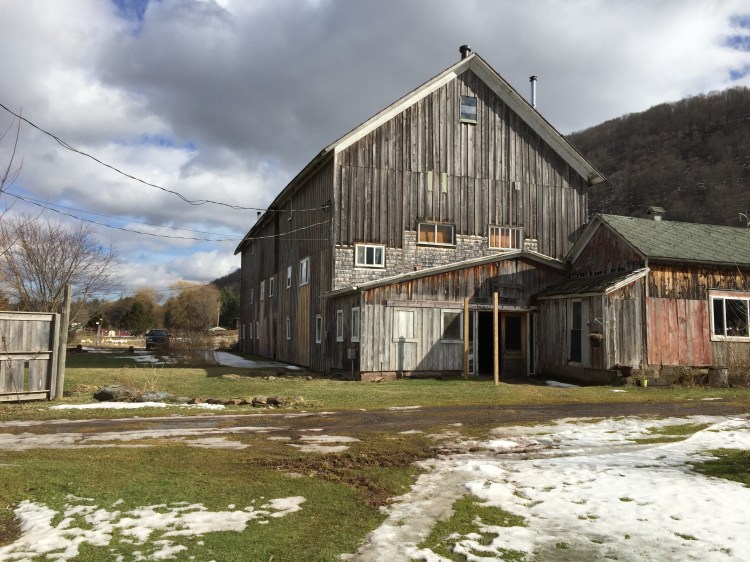


Billy Barn had 4 silos one time. Two were on the street side of the barn, one built inside the barn and a newer glass sealed blue metal silo on the mountain side of the barn. The two silos up front were gone by the time I got here. They were buried right where they fell and the steel bands stick out the ground. I had to plant Bee Balm around the steel rods to cover them up. A lot of the silo wood wound up inside the carriage house as wall panels running horizontally.
The metal silo, new technology must have cost a fortune to install, tons of concrete. Many farms went under paying for these silos. Now silos are obsolete, just wrap the hay in plastic. I gave that silo to a guy who raises Tilapia. He came and took it down panel by panel. He uses the sections of the silo to make aquariums for his fish farming business. He said the panels would never rust because they have glass literally baked onto both surface of the steel.
The inside silo is still inside but beaten up. There were only two places that made silos back in the days, one in Cobleskill the other in Sidney, NY.
In the studio laying time over ideas that are laid out singularly and forgotten.
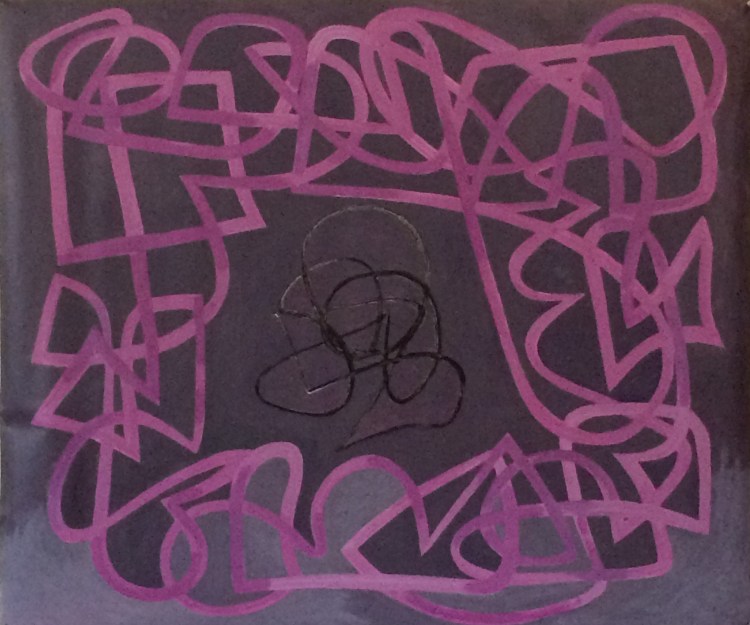
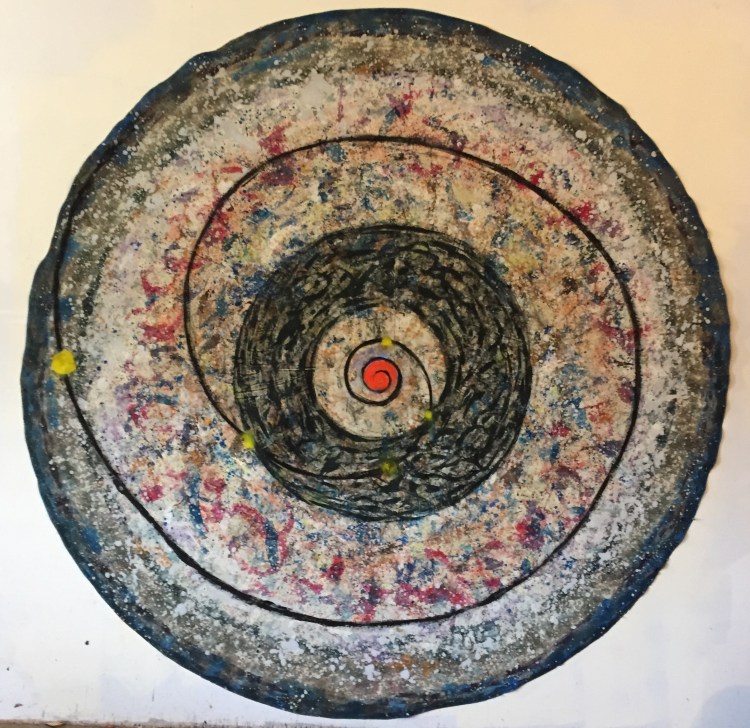
These are some of those works.
Acrylic brush drawing on paper.
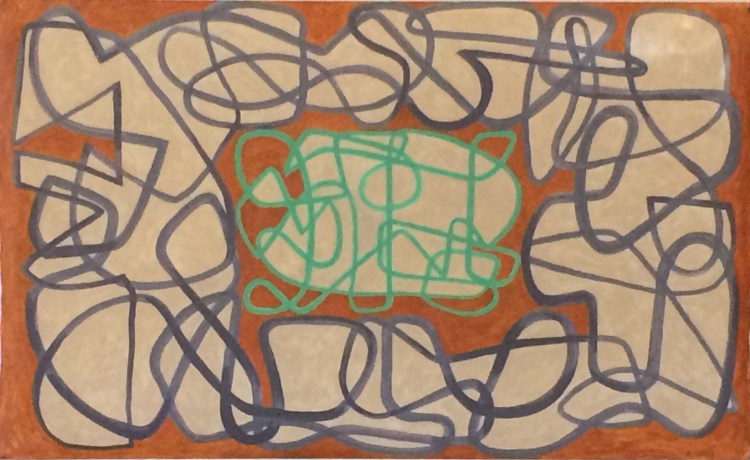
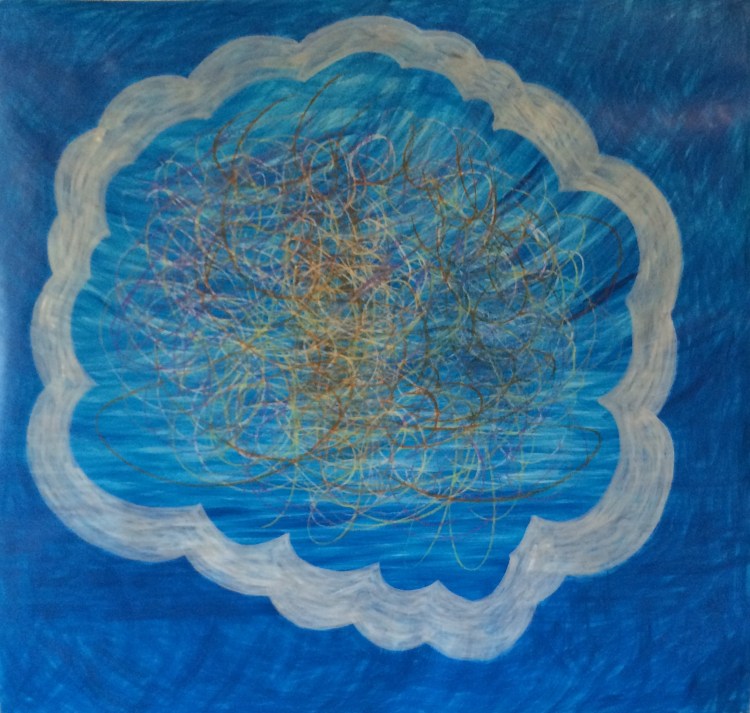
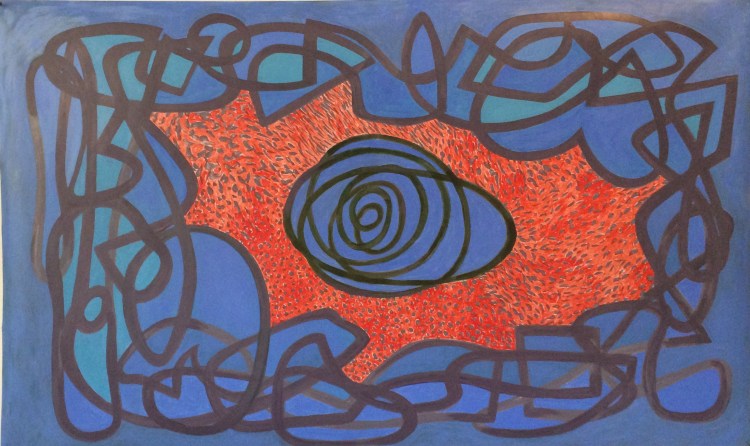

‘Molecular Museum’ 48″ x 72″, acrylic on polyester tablecloth. 2017
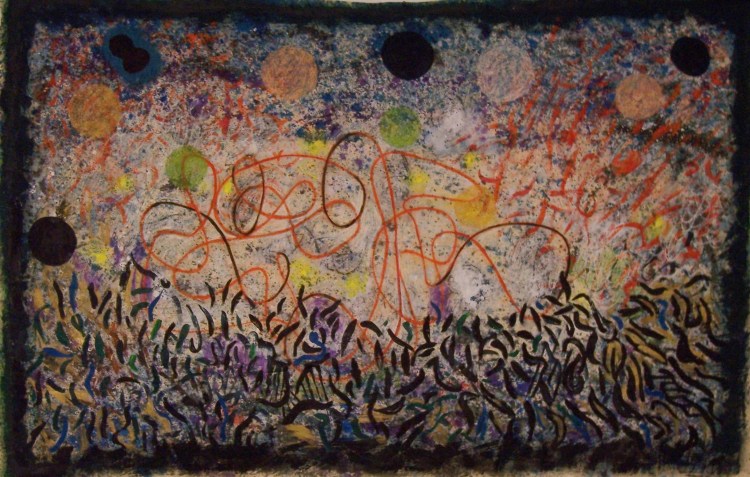
‘Juggler’ 30″x38″ acrylic on muslin over cardboard, 2017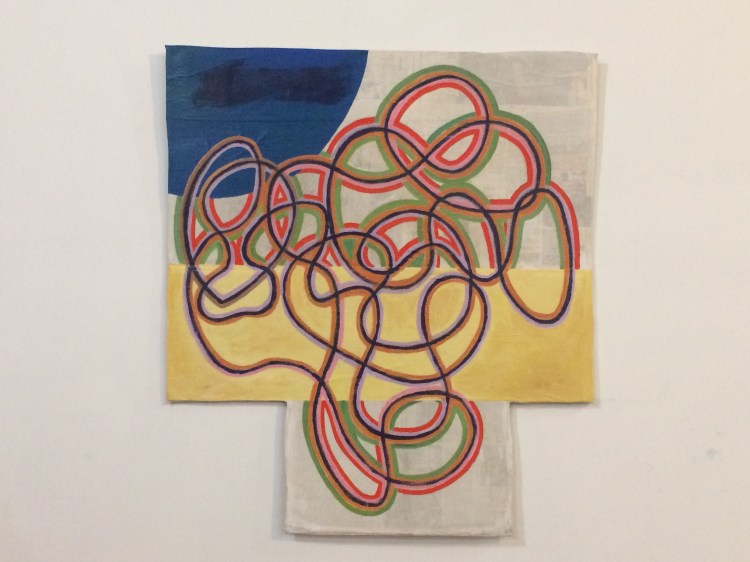
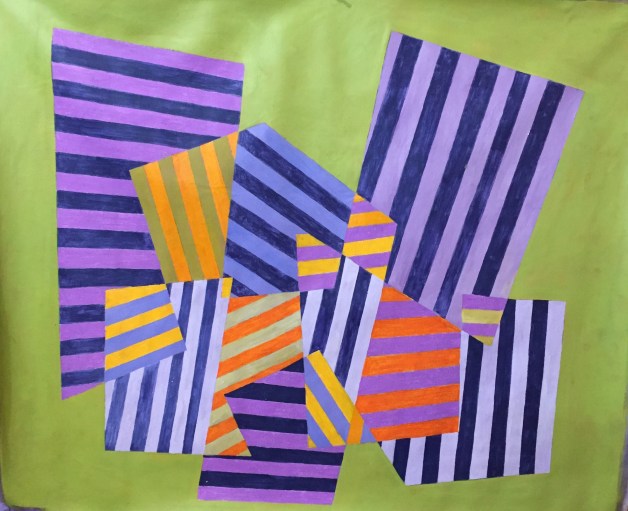
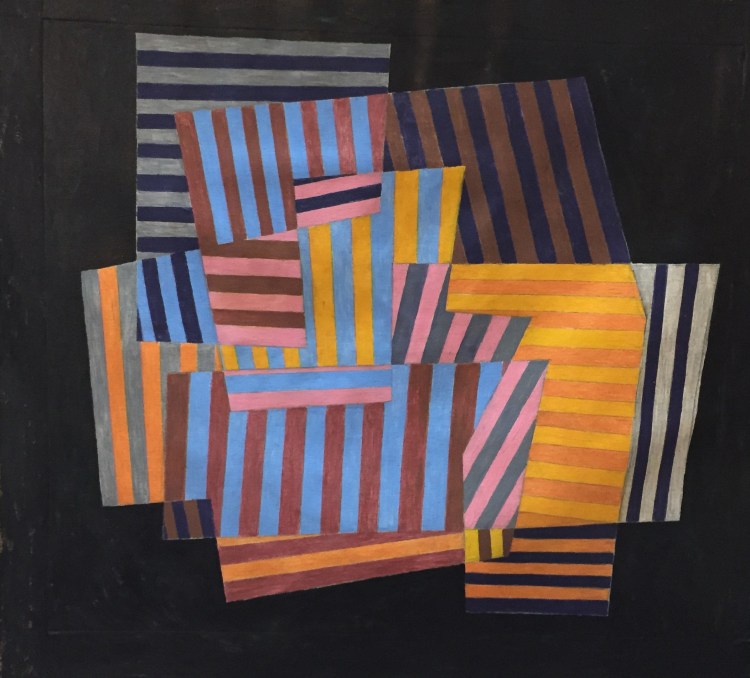
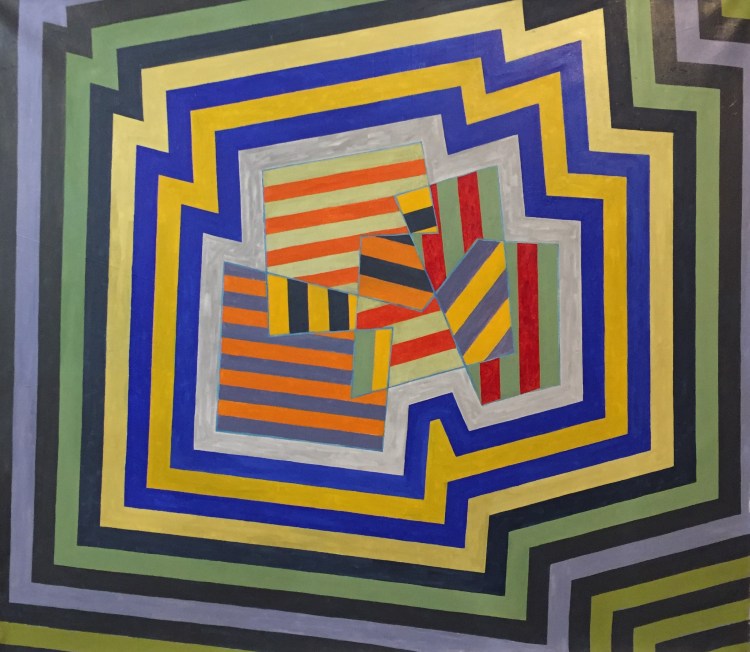
The clear path is always there. I don’t look to notice that it haunts my dreams and wide awake days.
The path is made clear step by step. Tall grasses flatten down as I step over and over, up the down hill slope until it becomes a path made clear by determination and self will.
I am not certain, I go anyway, aware, a little dread and fully intent on going all the way. The path itself is not clear about where it is going but to see it, my mind must be clear of all distractions, fears. To make it is to walk it over and over.
I see these distracting thoughts as passing clouds and know they exist because of who I am, living on a planet, 9,000 miles in diameter with billions of other people and once we live past 70 years we know for certain we will die in the near future.
It is this knowing that clears my mind to the uncertainty of the ways of the path.
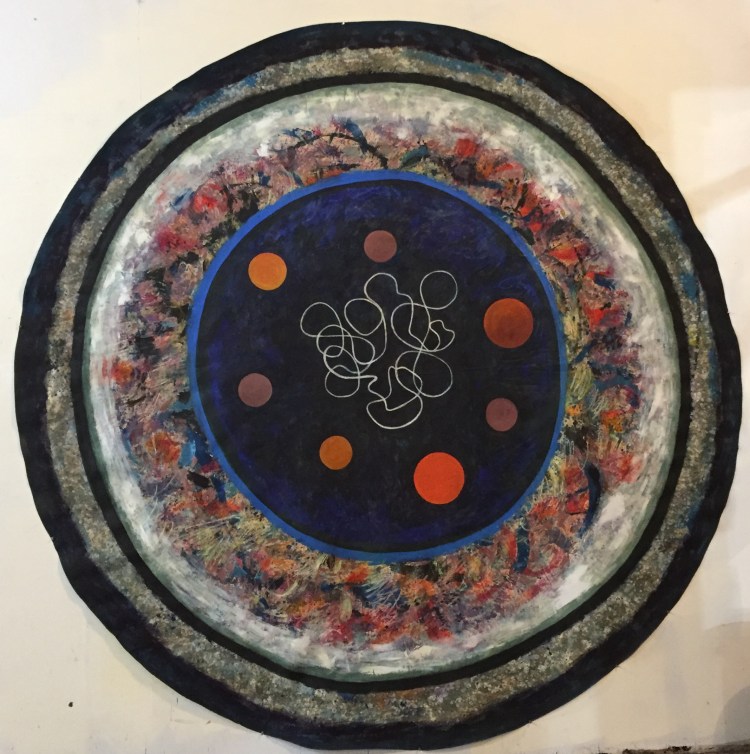
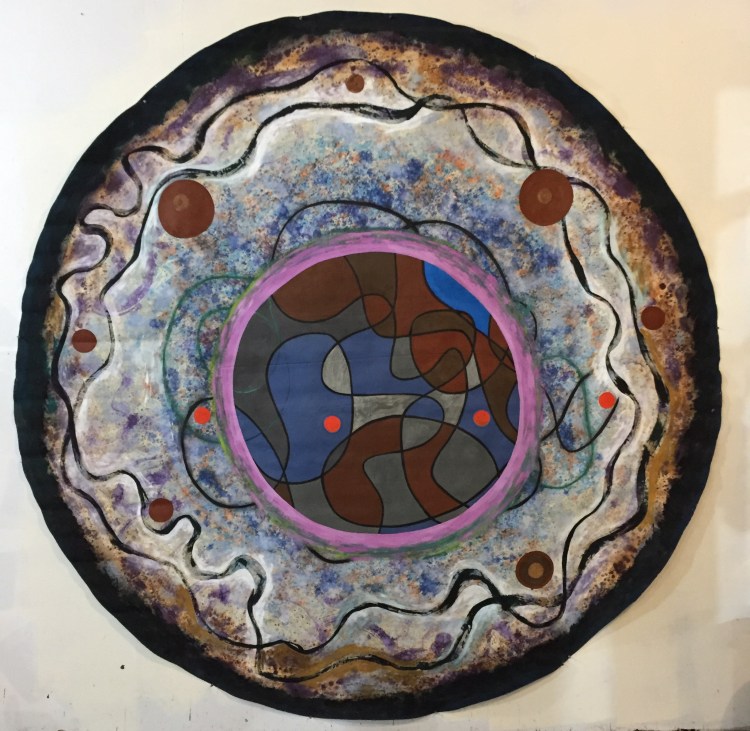
 Michael Milton